God deserves our adoration. He deserves, as Scripture tells us, our highest praises. What exactly does this look like, how is it accomplished, in reality?
I realized some years ago that simply saying "Praise the Lord" or "I praise you Lord" is not praising the Lord! The words "praise the Lord" in the Psalms are actually a command to God's people to open their mouths and say something about God. First of all, it is a command to open our mouths and say true things about God's greatness and goodness. Secondly, speaking these true things must spring from genuine admiration for him and thankfulness to him. And finally, we are to speak these things in this way both to others and to God himself. Praise is telling others about God, and praise is telling God about God, as we see in the Psalms.
Now, understanding that praising God consists of saying true things about his greatness and goodness with admiration and thankfulness, both to others and to God himself, we must remember something else we we learn from Scripture: it is from the abundance of the heart that we speak (Luke 6:45). If our hearts are not really filled with love and admiration for God, words of praise won't come spilling out of our mouths. We'll hardly know what to say about him. If our hearts feel stony and cold toward him, if we're hurt and confused by difficulties in our lives, for example, and we're unfamiliar with God's word and ways, this will stop up our hearts from admiration and thankfulness, and our words (or lack of them) will reflect this.
If we find ourselves in continuing (not temporary) difficulty with the biblical command to adore and praise God, the first thing to do is to realize that this is our lack; there is no lack in God's worth. If our knowledge of God through the Scriptures has not resulted in the assurance that we know him well, that we are on accepted and intimate terms with him, that he is our constant friend and ally, and that we may trust him completely with all our sorrows as well as all our joys, then our journey of faith may have gone amiss. We need to realize that it's possible to belong to him yet not know him well, if our knowledge of him has been gained through other means than a much-opened Bible and a Scripture-saturated life of prayer. If our hearts remain dull toward him, and words of praise and thanks are hard to find, then we must re-examine what we think we know of him.
The apostle Paul, in his second letter to the Corinthian church, exhorts the people to pay close attention to the message of the apostles because they, the apostles, have been made the ministers of the new testament wherein God's glory has been most fully revealed and made known. Paul says in 2 Corinthians 3:4-11 that the apostle's teaching is in fact the ministry of the Spirit, revealing the glory of God through Christ in a way that far surpasses what was seen through Moses. The message of the apostles "portrays Christ" in this way (Galatians 3:1), as do the rest of the Scriptures. This is why Paul says that when the Spirit of God removes the veil that blinds, we are set free to behold the glory of the Lord (2 Corinthians 3:16-17). And it is as we behold, as we see and gaze upon this glory, that we are transformed into the same image. We become, by degrees of glory, like that which we are gazing upon (2 Corinthians 3:18).
But how do we see and gaze upon the glory of the Lord? We can put all the above paragraph in very simple terms. Paul is speaking metaphorically, but what he means is simply this: it is by the Spirit's work of opening our spiritual eyes to the Christ of the Scriptures that we come to know and admire and thank God for what he has done. We behold the glory of the Lord when we hear or read, with spiritual understanding, the Bible's testimony about Christ and him crucified.
There in the written word we "see" the glory of Christ revealed through the various narratives, the explanations, and the teaching; this sight causes our admiration to blossom and swell and grow for all that God has done through the sending of his Son for our sin. There we see the hope for the resurrection of the body and the final restoration of all things. There we find the strength for going on, for how and why we are to hold on to hope in God (for how he holds us!). We need both the Old and New Testament Scriptures, for both paint the epic and tragic portrait of man, and of God's dealings with man; there we learn man's true story and nature, and the greatness of God's plan of the ages for our rescue.
It is our wide and faithful reading of Scripture that enables us to obey the command of God through the Psalmist to truly praise him. Unless we have studied the portrait of Christ in this way both in the OT and the NT, unless we have gazed upon the glory we see building steadily from Genesis to Malachi, and then bursting into full view from Matthew to Revelation, we won't know the true things to say about God.
If we're only used to praising God for what we have temporally—our good health, our nice cars and homes, our healthy loved ones—then we will be at a loss when those things are taken away. We should always be thankful for our health and for what God has provided. But we very much need to set to work cultivating a taste for the things of eternity, don't we. This taste is only truly gained when we comprehend the message of Scripture as explained by his appointed ministers of the good news. We can only adore and praise the God whose glory we now behold.
Open your Bible. Go to Ephesians 2:15-23 and pray along with Paul, for yourself and for all Christ's church, that "the God of our Lord Jesus Christ, the Father of glory, may give you a spirit of wisdom and of revelation in the knowledge of him, having the eyes of your understanding enlightened, that you may know what is the hope to which he has called you, what are the riches of his glorious inheritance in the saints, and what is the immeasurable greatness of his power toward us who believe..."
And keep reading the Scripture, fastening your gaze on the glory of God revealed there.
Showing posts with label Sorrow. Show all posts
Showing posts with label Sorrow. Show all posts
Thursday, December 26, 2013

Tuesday, March 15, 2011
Once Sorrowful, Now Always Rejoicing...Paul
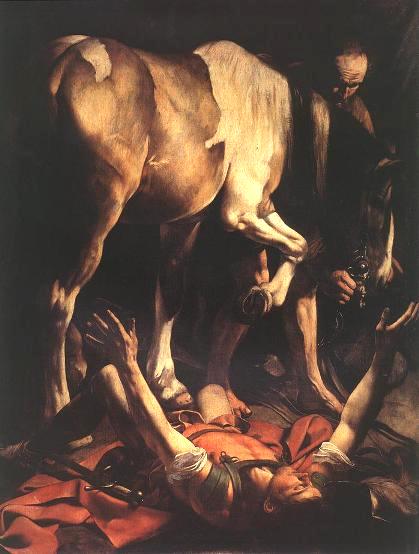 Sunday at lunch after church the conversation turned to the apostle Paul. We were discussing how that before his conversion, he had been a very determined fellow and very efficient and effective in his wrong-headed zeal, but after his conversion he found himself weakened, laid low by God, yet used very mightily by him to accomplish his mission. God had told Paul, "My strength is perfected in your weakness" (2 Corinthians 12:7-10). In this way it was evident that it was God who was doing great things, not Paul. Paul liked it that way, too. He now gloried only in the Cross, boasted only in Jesus Christ, and this was the best thing that had ever happened to him, by far. In fact, in comparison, all the "success" he had known before was now, to him, only like so much rubbish (Philippians 3:8)!
Our conversation turned to the sorrow that Paul carried always with him over his terrible treatment of believers before his conversion. He had dragged many out of their houses into prison; he had brought grief and heartache to many a family and many a church; he had been an accomplice to, if not outright doer of, murder. When Stephen, the godly and spirit-filled deacon in the early church in Jerusalem, was stoned to death for his testimony of Christ, Paul (Saul in those days) had stood by holding the coats of the men who stoned him... in other words, giving hearty approval.
We then thought of a wonderful thing. Just before Stephen died, he saw the heavens opened and the Son of Man standing at the right hand of the Father, waiting to receive this, his first martyr, into the heavenly realm. Stephen was so enraptured with this view of the risen Christ and the glories of heaven, I think it quite drew his attention away from the evil actions of the men who were about to take his life! Paul was standing right there, heard Stephen cry out in amazement at the vision, coldly watched as the angry mob carried out its grim purpose. And that, he thought at the time, was that.
But years later, this forgiven, weakened apostle had an amazing experience of his own. He was taken to heaven while still alive. There he heard things "that cannot be told, which man may not utter". The experience was so great, so glorious, that an affliction was given to him to buffet him about (even more than he already was!) to help him resist any sinful pride in this great privilege. Paul, who had stood by watching as Stephen died with eyes fastened on heaven, had now been transported there himself, to enjoy a brief foretaste of what Stephen had seen, and what Paul himself would soon be enjoying forever.
What did Paul see? What did he hear? We don't know because God said "No" on any reporting back about it. Paul is the only mortal man we know of who had this experience--a visit to heaven and return to this life, before death. (I'm sorry--no, glad--to say that we are to discount others' claims to this, like the "90 Days in Heaven" guy. Those stories just do not bear the weight of truth.) And how kind of God to grant his sorrowful-yet-rejoicing, always-bearing-in-the-body-the-death-of-the-Lord-Jesus apostle this wonderful experience. Paul, it may be safe to say, suffered more for righteousness' sake than any other except for the Lord himself. He was uniquely called to a life of hardship, sorrow, pain and loss. And so the Lord Jesus tenderly brings him to the dwelling place of God, just for a brief moment. He lets Paul take it all in, hear and see what no one has heard and seen and returned to tell about, soaking into his wearied soul, I'm sure, the glory to come, the unbelievable joy awaiting, marveling at the astonishing purposes and councils of the just and holy God, predetermined before the foundations of the world, all being perfectly executed by the willing and obedient angels.
And did he see his brother Stephen there? We don't know. As we were talking around the table, the wideness of this mercy and goodness of God to Paul sort of made us sober. Our eyes got big. What could we say? This was God's doing, this bringing his faithful apostle up for a taste of the good things to come, and to see first-hand the very things that his faithful deacon and martyr Stephen had seen on that day long before, that day when Paul had stood by, holding the coats.
Painting: The Conversion of Saul by Caravaggio
Friday, August 27, 2010
Why We Need the Puritans
 Why should those seeking to develop a truly biblical counseling approach give special consideration to the Puritans? Because they were the first Protestant school of Biblical Counseling.
J. I. Packer, who is most conversant with the writings of these men, puts it well:
". . . the Puritans . . . were strongest just where evangelical Christians today are weakest . . . Here were men of outstanding intellectual power, in whom the mental habits fostered by sober scholarship were linked with a flaming zeal for God and a minute acquaintance with the human heart."
Today’s biblical scholars don’t understand the human heart, Packer says, while our counselors don’t know the Scripture. But the Puritans were an entire generation of men who combined these two strengths. He goes on:
"The hollowness of our vaunted biblicism becomes apparent as again and again we put asunder things God has joined . . . we preach the gospel without the law, and faith without repentance . .. in dealing with the Christian experience we dwell constantly on joy, peace, happiness, satisfaction, and rest of soul with no balancing reference of the divine discontent of Romans 7, the fight of the faith of Psalm 73, or any of the burdens of responsibility and providential chastenings that fall to the lot of the child of God. . . they consult their pastor, and he perhaps has no better remedy than to refer them to a psychiatrist! Truly, we need help, and the Puritan tradition can give it."
(excerpt from an article by Tim Keller; read the rest here)
Friday, January 8, 2010
Angling Our Lives Toward God
 Alec Motyer comments on James 5:13:
Is anyone among you suffering? Let him pray. Is anyone cheerful? Let him sing praise.
"Our whole life, we might say, should be so angled towards God that whatever strikes upon us, whether sorrow or joy, should be deflected upwards at once into his presence. In particular, this is an exercise in glad acceptance of the will of God. This is the common denominator of prayer and praise. In praise, we say to him, 'Your will is good, perfect and acceptable; this is what you have done for me and I rejoice.' And as for prayer in times of trouble, it attempts--however poorly we may succeed--to copy the Gethsemane prayer of Jesus in saying, 'Not my will but yours.' R.V.G. Tasker notes helpfully that when Jesus was in agony, 'wrestling with the forces of evil at the moment of their strongest attack, he "prayed more earnestly" (Luke 22:44). Prayer may not remove the affliction but it most certainly can transform it.'
"This, then, is the individual at prayer. He is reflecting all his life upward, acknowledging the sufficiency and sovereignty of God, practicing the grace of acceptance and rejecting the disgrace of stubbornness. In this the voice of prayer and the voice of praise are at one, for alike they say that the will of God is good."
(I've been reading Motyer's wonderful commentary on James in the past weeks. Read a bit about his love for the Bible here.)
Photo
Friday, October 9, 2009
He Himself Will Wipe Every Tear
 Isaiah 25:8a--"He will swallow up death forever; and the Lord GOD will wipe away every tear from all faces."
"The exalted title of Sovereign Lord calls attention to the fact that in all the dignity of his divine Sovereignty, it is the Lord himself who will attend to our tears, moving from person to person until each eye has been dried." (Alec Motyer, The Prophecy of Isaiah)
Friday, October 2, 2009
Whatever My God Ordains is Right
Whatever my God ordains is right: His holy will abides;
I will be still whatever He does, and follow where He guides.

I will be still whatever He does, and follow where He guides.
He is my God; though dark my road,
He holds me that I shall not fall;
Wherefore to Him I leave it all.
Whatever my God ordains is right: He never will deceive me.
He leads me by the proper path; I know He will not leave me.
I take, content, what He has sent;
His hand can turn my griefs away,
And patiently I wait His day.
Whatever my God ordains is right: His loving thought attends me;
No poison can be in the cup that my Physician sends me.
My God is true; each morning new
I’ll trust His grace unending,
My life to Him commending.
Whatever my God ordains is right: He is my Friend and Father;
He suffers naught to do me harm, though many storms may gather.
Now I may know both joy and woe,
Some day I shall see clearly
That He has loved me dearly.
Whatever my God ordains is right: though now this cup, in drinking,
May bitter seem to my faint heart, I take it, all unshrinking.
My God is true; each morning new
Sweet comfort yet shall fill my heart,
And pain and sorrow shall depart.
Whatever my God ordains is right: here shall my stand be taken;
Though sorrow, need, or death be mine, yet I am not forsaken.
My Father’s care is round me there;
He holds me that I shall not fall:
And so to Him I leave it all.

Subscribe to:
Posts (Atom)