I changed the name of my blog. It comes from Psalm 71:20-21:
You who have made me see many troubles and calamities
will revive me again;
from the depths of the earth
you will bring me up again.
You will increase my greatness
and comfort me again.
Psalm 71 speaks to me of God's sovereignty and goodness in both making us see many troubles and in reviving us again. It speaks to me of our great hope in the coming of Christ and in the resurrection from the dead, comforted then forevermore! It speaks to me of God's great faithfulness to his pilgrim people as we sojourn on through a difficult landscape, and of the hope I have that even though I'm growing older, God isn't through with me yet! Until the last breath I can speak with is done, I hope I am still praying, trusting, and proclaiming this way:
O God, from my youth you have taught me,
and I still proclaim your wondrous deeds.
So even to old age and gray hairs,
O God, do not forsake me,
until I proclaim your might to another generation,
your power to all those to come. Psalm 71:17-18
Showing posts with label Heaven. Show all posts
Showing posts with label Heaven. Show all posts
Sunday, August 21, 2011

Wednesday, July 27, 2011
Spurgeon's Fifth
"A Call to Prayer and Testimony" was preached by C.H. Spurgeon at the Metropolitan Tabernacle in London on February 8th, 1891. His text that morning was Isaiah 62:6-7: "On your walls, O Jerusalem, I have set watchmen; all the day and all the night they shall never be silent. You who put the LORD in remembrance, take no rest, and give him no rest until he establishes Jerusalem and makes it a praise in the earth". Here from that sermon is Spurgeon's fifth reason not to rest:
Above all, let us never rest out of despair. The feeling does come over you sometimes—"What is the use of our labor? So little comes of it. What is the use of protesting for the truth? The churches will not hear you. You only earn ill-will, and are ridiculed as an old fogy. What is the use of being earnest about winning souls? Men are indifferent. The present engrosses thought—social questions are pressing. Everybody pines for sensationalism or amusement. What profit is there in keeping to the old way?"
That spirit creeps over the child of God like the cold of the Arctic regions, numbing him and tending to send him into the sleep of despair. The evidence of this evil power is found in the tendency to restrain prayer before God. From this may our God rescue us! Come, my brothers, I do not know who among you is going to sleep; but I would like to shake the man who is so benumbed, and wake him up; and I hope that, in your turn, when you see me benumbed, you will shake me also, and wake me up to diligence in prayer. Let us awake this morning, and begin again.
We must not, will not, yield to slumber. There is small cause for fear, and no cause for despair. Our cause defeated? Not a bit of it! All will come right yet. God waits; but he waits that he may be gracious unto us. His time to favor Zion will come, and the good old cause will win the victory. The work of the Lord is in a greater hand than ours. He will not fail nor be discouraged. "Men ought always to pray, and not to faint"; and when they feel that they are fainting, they should resolve to pray with double earnestness, and faintness will yield to joy.
(You can read the whole wonderful thing here.)
Tuesday, April 5, 2011
A Vision of Jesus

Remembering Stephen's dying glimpse of the glory of God and of Jesus standing at the right hand of God (Acts 7:54-60) encouraged me this morning. In a very real way, as we live out lives of martyrdom for the sake of his renown, we've been given the same view:
"For God, who said, 'Let light shine out of darkness,' has shone in our hearts to give the light of the knowledge of the glory of God in the face of Jesus Christ" (2 Corinthians 4:6).
"But we see him who for a little while was made lower than the angels, namely Jesus, crowned with glory and honor because of the suffering of death, so that by the grace of God he might taste death for everyone" (Hebrews 2:9).
But wait a minute, you might say--living out a "life of martyrdom"? Really? Yes. It's the calling of every disciple of his: "And he said to all, 'If anyone would come after me, let him deny himself and take up his cross daily and follow me'" (Luke 9:23).
"Why are we in danger every hour? I protest, brothers, by my pride in you, which I have in Christ Jesus our Lord, I die every day," said Paul, who had once stood by approvingly, guarding the coats of the men who were stoning Stephen (Acts 7:54-60).
As we pilgrim through this barren land, denying ourselves, taking up our cross daily, we need a sure view of the glory of God and of the risen, glorious Christ. With the eyes of our understanding we must comprehend, as surely as Stephen saw with his physical eyes, Jesus rising to stand, preparing to welcome with the crown of life (James 1:12) every cross-bearer for his sake into his heavenly kingdom.
Tuesday, March 15, 2011
Once Sorrowful, Now Always Rejoicing...Paul
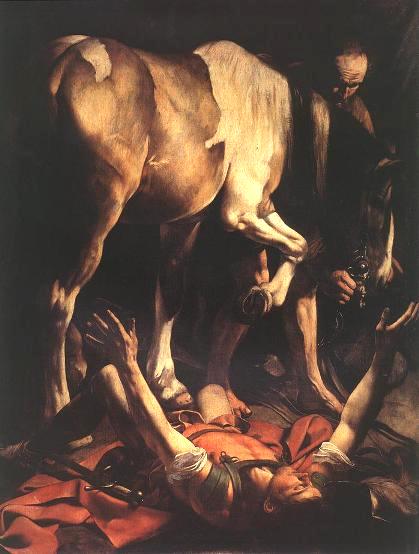 Sunday at lunch after church the conversation turned to the apostle Paul. We were discussing how that before his conversion, he had been a very determined fellow and very efficient and effective in his wrong-headed zeal, but after his conversion he found himself weakened, laid low by God, yet used very mightily by him to accomplish his mission. God had told Paul, "My strength is perfected in your weakness" (2 Corinthians 12:7-10). In this way it was evident that it was God who was doing great things, not Paul. Paul liked it that way, too. He now gloried only in the Cross, boasted only in Jesus Christ, and this was the best thing that had ever happened to him, by far. In fact, in comparison, all the "success" he had known before was now, to him, only like so much rubbish (Philippians 3:8)!
Our conversation turned to the sorrow that Paul carried always with him over his terrible treatment of believers before his conversion. He had dragged many out of their houses into prison; he had brought grief and heartache to many a family and many a church; he had been an accomplice to, if not outright doer of, murder. When Stephen, the godly and spirit-filled deacon in the early church in Jerusalem, was stoned to death for his testimony of Christ, Paul (Saul in those days) had stood by holding the coats of the men who stoned him... in other words, giving hearty approval.
We then thought of a wonderful thing. Just before Stephen died, he saw the heavens opened and the Son of Man standing at the right hand of the Father, waiting to receive this, his first martyr, into the heavenly realm. Stephen was so enraptured with this view of the risen Christ and the glories of heaven, I think it quite drew his attention away from the evil actions of the men who were about to take his life! Paul was standing right there, heard Stephen cry out in amazement at the vision, coldly watched as the angry mob carried out its grim purpose. And that, he thought at the time, was that.
But years later, this forgiven, weakened apostle had an amazing experience of his own. He was taken to heaven while still alive. There he heard things "that cannot be told, which man may not utter". The experience was so great, so glorious, that an affliction was given to him to buffet him about (even more than he already was!) to help him resist any sinful pride in this great privilege. Paul, who had stood by watching as Stephen died with eyes fastened on heaven, had now been transported there himself, to enjoy a brief foretaste of what Stephen had seen, and what Paul himself would soon be enjoying forever.
What did Paul see? What did he hear? We don't know because God said "No" on any reporting back about it. Paul is the only mortal man we know of who had this experience--a visit to heaven and return to this life, before death. (I'm sorry--no, glad--to say that we are to discount others' claims to this, like the "90 Days in Heaven" guy. Those stories just do not bear the weight of truth.) And how kind of God to grant his sorrowful-yet-rejoicing, always-bearing-in-the-body-the-death-of-the-Lord-Jesus apostle this wonderful experience. Paul, it may be safe to say, suffered more for righteousness' sake than any other except for the Lord himself. He was uniquely called to a life of hardship, sorrow, pain and loss. And so the Lord Jesus tenderly brings him to the dwelling place of God, just for a brief moment. He lets Paul take it all in, hear and see what no one has heard and seen and returned to tell about, soaking into his wearied soul, I'm sure, the glory to come, the unbelievable joy awaiting, marveling at the astonishing purposes and councils of the just and holy God, predetermined before the foundations of the world, all being perfectly executed by the willing and obedient angels.
And did he see his brother Stephen there? We don't know. As we were talking around the table, the wideness of this mercy and goodness of God to Paul sort of made us sober. Our eyes got big. What could we say? This was God's doing, this bringing his faithful apostle up for a taste of the good things to come, and to see first-hand the very things that his faithful deacon and martyr Stephen had seen on that day long before, that day when Paul had stood by, holding the coats.
Painting: The Conversion of Saul by Caravaggio
Saturday, November 20, 2010
Chasing the Wind and the Words of the Preacher
I needed Ecclesiastes this week. Life is real and life can be painful, and God was good to let me hear Alistair Begg on the radio teaching a little from that book the other day. So I decided to turn to its pages once again and am so glad I did.
The message of Ecclesiastes is a confirmation that no, you're not crazy, and yes, the creation is in trouble and all our lives reflect that. It is because of the fall of Adam in the garden, because of the disastrous effects of sin. We're all now subject to the vanity of all worldly pursuits. They are all "fleeting, ephemeral, and elusive," as the ESV Study Bible introduction to the book puts it; the word translated "vanity" (over 38 times) in Ecclesiastes is literally "vapor." It is the same word and idea Paul uses in Romans 8 as he explains that in the Fall, the "creation was subjected to futility, not willingly, but because of him who subjected it" (Romans 8:20).
We all know this, deep down. We may forget it for periods at a time, we may push it to the backs of our minds, but it only takes the right difficult circumstance to remind us vividly that the world is broken, and so to a great extent are our lives. It is a fact too painful to be acknowledged apart from hope. Some of the philosophers acknowledged it and came up with observations and solutions that lead nowhere but to a stoic bearing up under it all until death comes in relief. Some of the philosophers ended in despair. But that's not where Ecclesiastes goes. Thank God!
The message of Ecclesiastes is the greatest of news for the weary, the hopeless, the one who has "eyes wide open" and does not want to sugar-coat this life. The good news is this: God has told us all that he expects of his people (Micah 6:8). It is not too hard for us! (Deuteronomy 30:11-14, Romans 10:6-8, Matthew 11:28-30). That is because of Jesus Christ, God in the flesh who "came near" to make a way for us to heaven and to the resurrection (John 14:6). (Yes, I know Ecclesiastes doesn't know all this yet, but this is the way the Bible interprets itself.) More good news, straight from the pages of Ecclesiastes:
"He [God] has made everything beautiful in its time. Also, he has put eternity into man's heart, yet so that he cannot find out what God has done from the beginning to the end. I [the Preacher] perceived that there is nothing better for them [the children of men, that's us] than to be joyful and to do good as long as they live; also that everyone should eat and drink and take pleasure in all his toil--this is God's gift to man" (Ecclesiastes 3:11-13). Isn't that such kindness from God?
God is sovereign over all our affairs, whether we have abundance (materially) or little: "In the day of prosperity be joyful, and in the day of adversity consider: God has made one as well as the other, so that man may not find out anything that will be after him" (Ecclesiastes 7:14). Quit trying to play God, and relax! Trust him who holds all these things in his sovereign hands.
Don't labor and toil for vain things, but do toil: "Behold, what I have seen to be good and fitting is to eat and drink and find enjoyment in all the toil with which one toils under the sun the few days of his life that God has given him, for this is his lot [there's God's sovereignty again!]. Everyone also to whom God has given wealth and possessions and power to enjoy them, and to accept his lot and rejoice in his toil--this is the gift of God. For he will not much remember the days of his life because God keeps him occupied with joy in his heart" (Ecclesiastes 5:18-20).
The message of Ecclesiastes is that there is so much about God's ways and his decretive (secret) purposes we don't know, that therefore we should live the short life we have on this earth humbly, in recognition of that, but in gratitude for the blessings of work, and family and God's provision for us (Ecclesiastes 9:7-9), whether little or a lot (it's always enough!). We should not be puffed up and "think more highly of ourselves than we ought to" (Romans 12:3). All mankind is in the same boat--the end of us all is the grave (Ecclesiastes 9:1-2). All this wisdom and truth of Ecclesiastes is to be understood in the New Testament revelation of Christ and what God did through him to win our salvation. For those who have received the truth of the gospel there is Heaven to look forward to.
Ecclesiastes ends with this: "The end of the matter: all has been heard. Fear God and keep his commandments, for this is the whole duty of man. For God will bring every deed into judgment with every secret thing, whether good or evil" (Ecclesiastes 12:13). This is the key to living. Life is complicated and fraught with difficulty, even evil, but God has given us a compass that points true North as we journey through: "Fear God and keep his commandments." He gave us the best motivation to do so, as well: "For God will bring every deed into judgment, with every secret thing, whether good or evil." In between those two things lies our life, to be lived in simple, glad obedience, trust and gratitude.
I'm so thankful for Ecclesiastes. It's words are like "goads" (Ecclesiastes 12:11), the sharp, pointed sticks that keep the flock to the right path, and they are like "nails firmly fixed" (12:11), providing "moral and intellectual stability" (from the ESV Study Bible explanatory notes). It has been that for me over the past few days. Vanity, vanity, all is vanity apart from Christ. All flesh is as grass; the grass withers and the flower fades, but the word of the Lord, it lasts forever (1 Peter 1:22-25).
Friday, October 9, 2009
He Himself Will Wipe Every Tear
 Isaiah 25:8a--"He will swallow up death forever; and the Lord GOD will wipe away every tear from all faces."
"The exalted title of Sovereign Lord calls attention to the fact that in all the dignity of his divine Sovereignty, it is the Lord himself who will attend to our tears, moving from person to person until each eye has been dried." (Alec Motyer, The Prophecy of Isaiah)
Monday, December 29, 2008
He Heals the Brokenhearted
"Time heals all wounds," so the old saying goes, but it's not exactly true...only God heals! He created time and uses it for good, but he alone is the One who "heals the brokenhearted and binds up their wounds" (Psalm 147:3.) So how does God work to heal our broken hearts?
He does it by words of comfort that show us there is still hope, and that one day he will make all things right. He does this through his Holy Spirit, the promised Comforter, who takes his words found in the pages of Scripture and presses them close to our hearts. If we are looking for healing and binding up of wounds apart from his words of grace and hope we will not find it! There is no true hope of healing and restoration apart from him.
If his promises of heaven to come, of his sustaining strength and power for the trials we face now, and his unfailing love for us are of no comfort to us in our sorrow and loss, then we will look in vain for true healing for our broken hearts. The comforts and consolations of this world are empty and will not satisfy. Only the truth will do--the truth found in the promises of Christ.
"But for you who fear my name, the sun of righteousness shall rise with healing in its wings. You shall go out leaping like calves from the stall" (Malachi 4:2.) The comforting, healing, life-giving promises of God are for those who love him, who "fear his name" and who look to him with patient trust. One day, all those who do will find themselves healed, whole and full of joy unspeakable... as little calves set free go leaping, out into the bright sunshine.

Monday, October 20, 2008
It Is Not Death to Die

One of my favorite new CD's, "Come Weary Saints" is from the wonderful folks at Sovereign Grace Music. It just doesn't get any better than the music they put out. Much of it is suitable for congregational singing, and all of it is very good for your soul.
"Come Weary Saints" is filled with songs specifically aimed at God's people who've grown weary in the race; that can be any one of us on any given day. You can order it and others here.
But the reason I mention it today is because of this post. Terry Stauffer is a pastor in Canada whose young daughter Emily was recently murdered as she was walking near their home. The next few entries following the first announcement are well worth reading.
"It Is Not Death to Die," a song from the "Come Weary Saints" cd, was played by the Stauffers at Emily's memorial service. Terry says this in his October 16th post: "I had a history professor in seminary that said, 'Young people today are not learning songs in church that they can sing at funerals.' That is often true. I'm glad that's not true at our church."
It will be good to read Terry Stauffer's thoughts and taste how strong and life-giving the gospel of Jesus Christ is. For those who love Him, it is not death to die.
(Find a soundclip of "It Is Not Death to Die" here.)
Subscribe to:
Posts (Atom)